Our analysis, with the evidence.
StrideNote insights: analysis, comparisons and explainers on AI and technological systems, built on primary sources and our own findings.
 Insights
Agent skills vs MCP: what each one adds to a coding agent, from the specs and our setup
Agent skills vs MCP: a skill adds knowledge from files on disk, an MCP server adds tools over a protocol.…
 Insights
Speculative decoding vs MTP: the same speed trick, with the draft in a different place
Speculative decoding vs MTP: a separate draft model or draft layers inside the model. The llama.cpp flags and acceptance rates…
 Insights
Hermes Agent with Gemma 4 31B: why it loads 193,280 tokens of context on a Mac
Hermes Agent Gemma 4 31B loads at 193,280 tokens per slot in Hermes's own engine. The log, the estimator line…
 Insights
Qwen3.6 35B-A3B vs Gemma 4 31B on a Mac: 50 tokens a second, 4 answers in 12
Qwen3.6 35B-A3B vs Gemma 4 31B in Hermes on a 48 GB M4 Pro: Qwen ran at 50.8 tokens a…
 Insights
The two Gemma 4 31B entries: how Reki and forge play ARC-AGI-3
Second and third in the ARC-AGI-3 milestone both ran Gemma 4 31B on vLLM: four frames at eight times scale,…
 Insights
Infinite play by eviction: how a 27B plays past its context window
Infinite play by eviction: how the winning ARC-AGI-3 harness keeps a 27B model playing past a 64K context by dropping…
 Insights
The Duck harness, read line by line: how a 27B won an ARC-AGI-3 milestone
The Duck harness won the first ARC-AGI-3 milestone with a 27B model and a Python REPL, scoring 1.21% official and…
 Insights
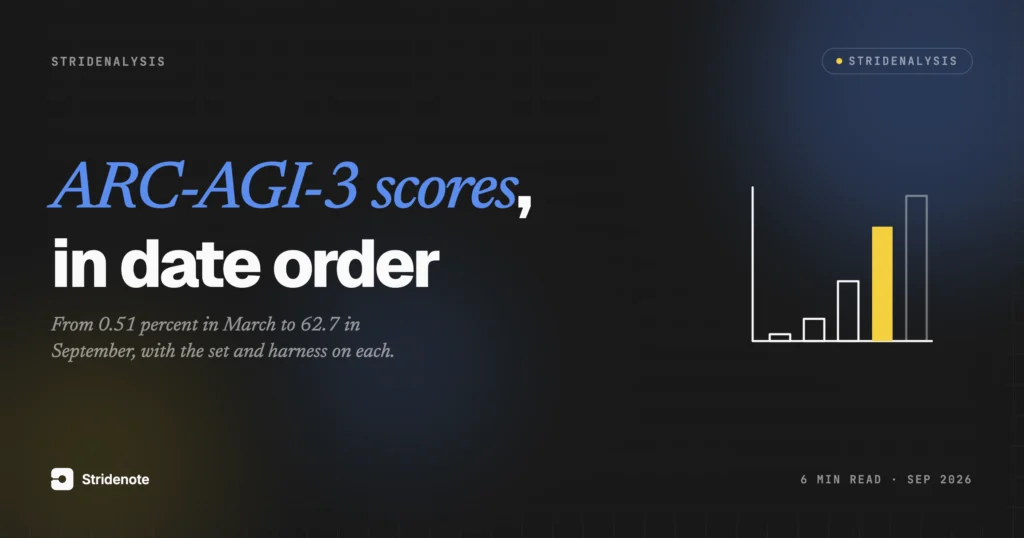
ARC-AGI-3 scores: under 1% is six months out of date
ARC-AGI-3 scores from 0.51% at launch to 62.7% shared harness and 99.9% vendor harness in September 2026, in date order…
 Insights
ARC-AGI-2 vs ARC-AGI-3: what changed, and why the numbers do not transfer
ARC-AGI-2 vs ARC-AGI-3: static puzzles scored on accuracy against interactive games scored on action efficiency. Why a 24% and a…
 Insights
Reasoning tokens are output tokens, and five APIs count them differently
Reasoning tokens are output tokens on LM Studio, OpenAI, Anthropic, Gemini and OpenRouter, and each names and caps them differently.…
 Insights
The ARC-AGI-3 human baseline: all 183 levels, read from disk
The ARC-AGI-3 human baseline is the upper median first-time player, not the best. All 183 baselines read from disk: 6…
 Insights
All 25 public ARC-AGI-3 games compared, from source
All 25 public ARC-AGI-3 games downloaded and compared from source: lines of code, levels, action sets, human baselines, and what…
 Insights
How an ARC-AGI-3 game runs: ARCBaseGame from source
ARCBaseGame is the 593 line class every ARC-AGI-3 game inherits. The action loop, why RESET means two things, and the…
 Insights
What is inside an ARC-AGI-3 game file
We opened an ARC-AGI-3 game file: 2,060 lines of runnable Python with 26 of 34 functions renamed to random letters.…
 Insights
ARC-AGI-3 is not saturated: which number to believe
Is ARC-AGI-3 saturated? Three numbers are circulating as a solved benchmark, and only one compares systems. Which set, which harness,…
 Insights
RHAE explained: how ARC-AGI-3 scores an agent
RHAE is not accuracy. It scores your agent on moves against a first-time human, squared. Here is the formula, the…
 Insights
NVFP4 vs MXFP4: the same 4 bits, 36% apart
MXFP4 vs NVFP4 comes down to two choices: block size and scale format. Same 4-bit element, and NVIDIA reports MXFP4…
 Insights
NVFP4 vs Q4_K_M: the vendor published no numbers, and the independent ones favour Q4_K_M
NVFP4 vs Q4_K_M: the vendor published no numbers to check, and the one independent comparison has Q4_K_M ahead on KL…
 Insights
Does llama.cpp support MLX? No, and a maintainer explained why in 2023
Does llama.cpp support MLX? No, and a maintainer said why in 2023. What Apple Silicon actually runs on, what Ollama…
 Insights
NVFP4 on Apple Silicon: an NVIDIA format that only runs on a Mac
NVFP4 on Apple Silicon is an NVIDIA format Ollama will only serve to macOS. Why the 412 error exists, what…
 Insights
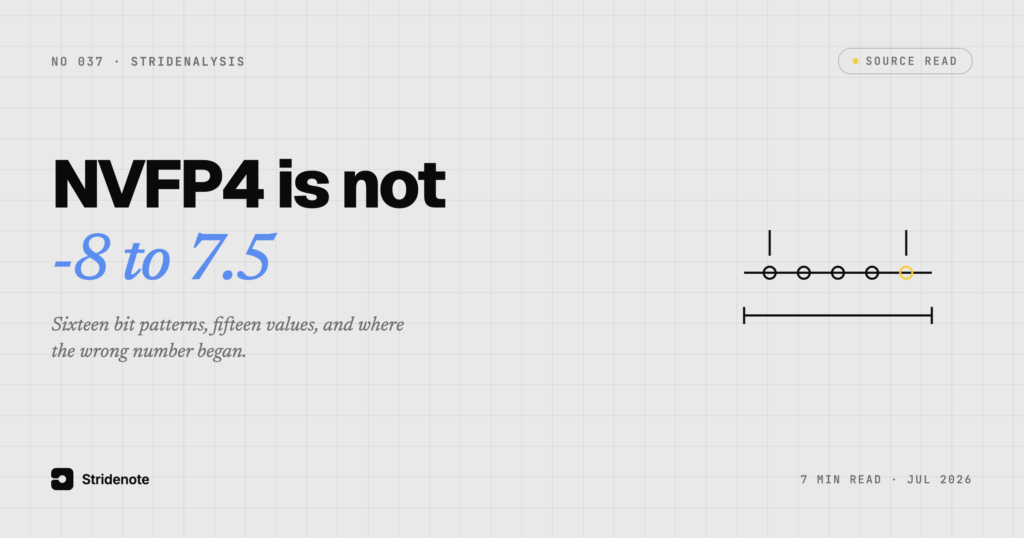
NVFP4 does not range from -8 to 7.5: the 16 values, corrected
The NVFP4 range is not -8 to 7.5. Its 16 bit patterns hold just 15 values, from -6 to 6,…
 Insights
The largest distillation attack yet: the Alibaba numbers
Somewhere between late April and early June, a machine somewhere opened a fresh conversation with Claude roughly every seventh of…
 Insights
Brand voice for AI agents: the layer that beats a better model
We built a five-file brand voice for AI agents. Why the output spec, not the model, is the layer that…
 Insights
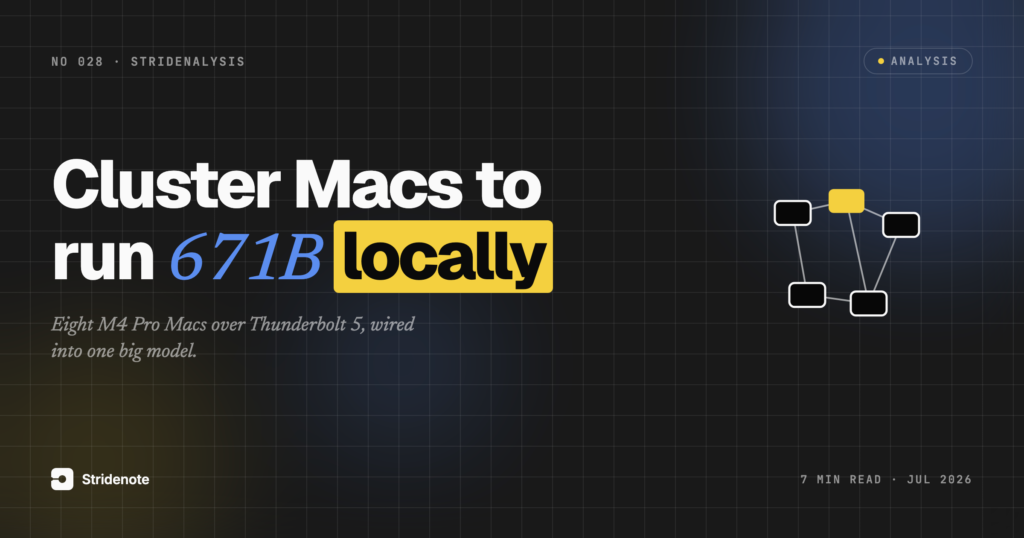
How exo Clusters Macs to Run a 671B Model Locally
exo is open-source software that pools several Apple Silicon Macs into one machine, so a cluster can run models like…
 Insights
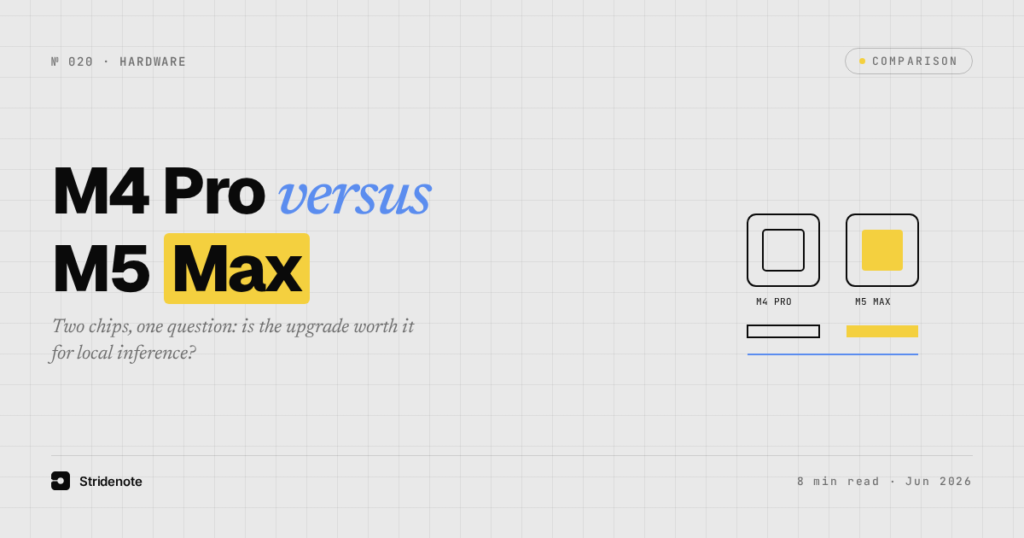
M4 Pro vs M5 Max for local inference on Apple silicon
M4 Pro vs M5 Max for local inference. Memory bandwidth, unified memory ceilings and time to first token, and whether…
 Insights
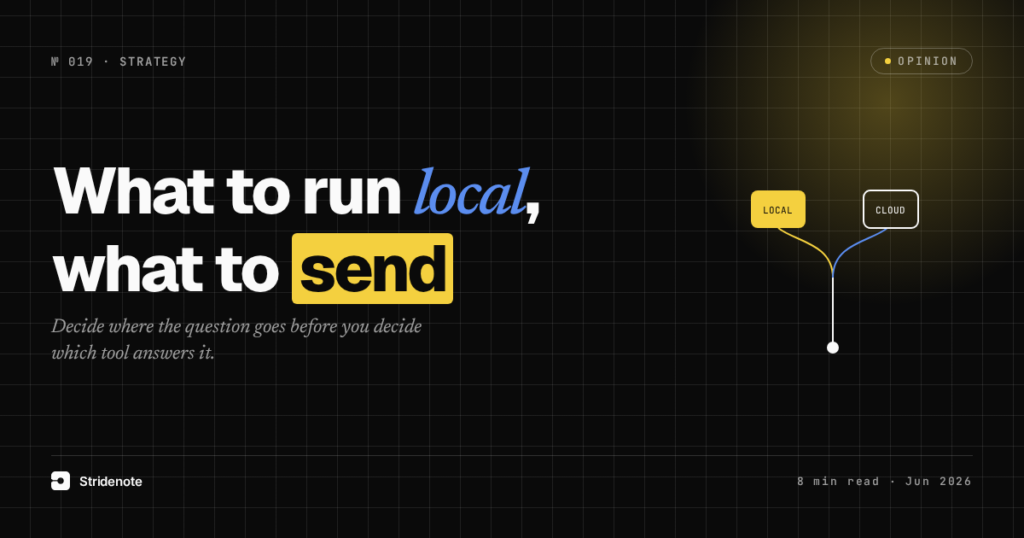
Local vs cloud AI: what to run where in 2026
Local vs cloud AI in 2026. A decision guide for what to run on your own hardware, what to send…
 Insights
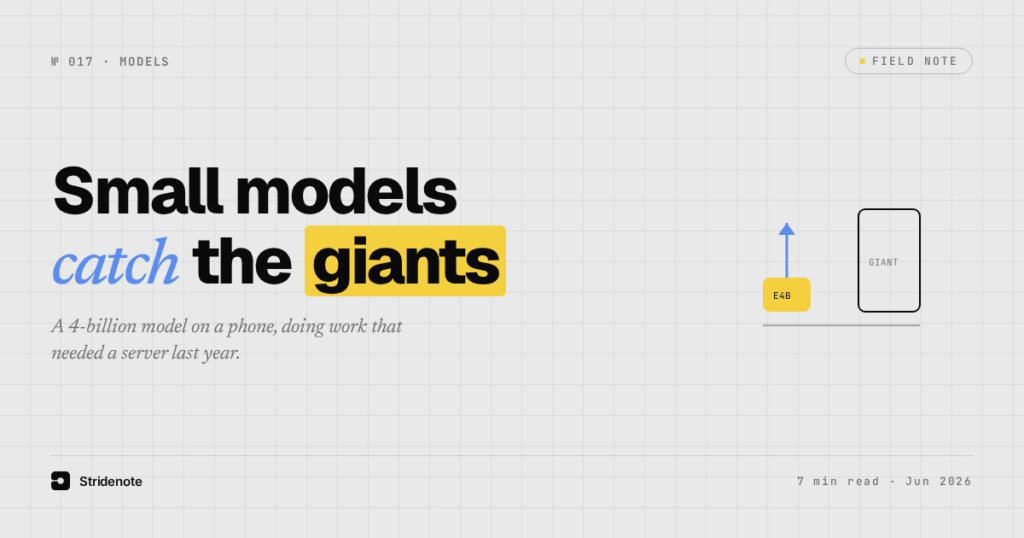
Gemma 4 E4B on edge hardware: small models catch up
Gemma 4 E4B runs on 8 GB of unified memory. What a small model can now do on edge hardware,…
 Insights
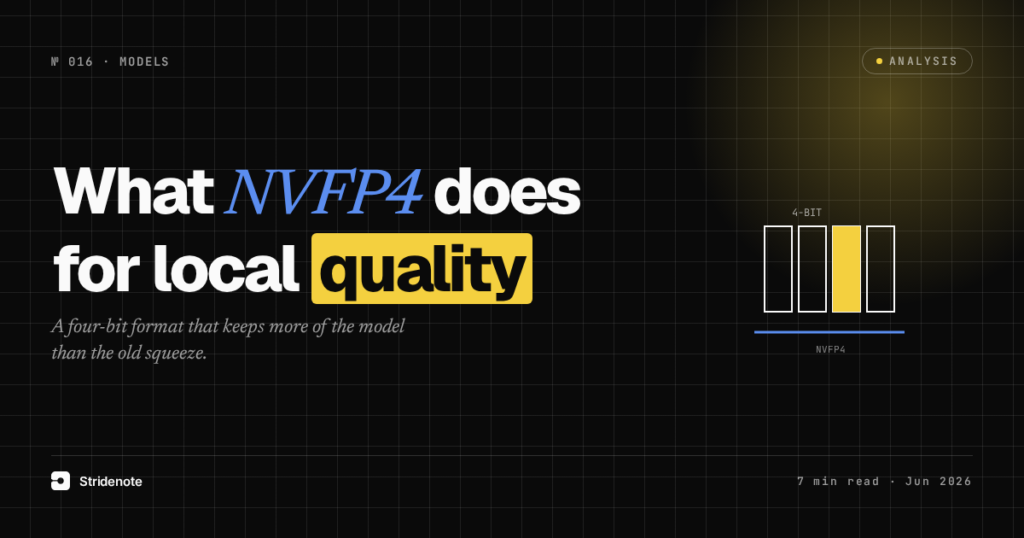
What Ollama NVFP4 means for local model quality
Ollama NVFP4 and q4_K_M are nearly the same size on disk. What the newer 4-bit format changes for local model…
 Insights
Gemma 4 26B MoE local: quality per gigabyte on unified memory
Gemma 4 26B MoE runs from 16 GB of weights. We look at quality per gigabyte on unified memory, and…
 Insights
Gemma 4 31B vs Qwen 3.5 27B on unified memory
Gemma 4 31B vs Qwen 3.5 27B on unified memory. Which fits, which is faster, and which answers better when…
 Insights
MLX vs llama.cpp vs MetalRT: best inference engine on Apple Silicon in 2026
MLX vs llama.cpp vs MetalRT: one quantized model, three engines, one Mac. Generation speed, memory and setup, measured rather than…
 Insights
LM Studio vs Ollama on Mac: which one to use in 2026
LM Studio vs Ollama on a Mac in 2026. Setup, speed, model management and the API each one exposes, plus…
 Insights
What the Ollama MLX shift means for local AI on Mac
Ollama is moving toward MLX on Apple Silicon. What the shift changes for speed, memory and model choice, and whether…
 Insights
Privacy-first coding: why you should run AI agents entirely offline
Your config files hold keys and endpoints. Here is why we run AI agents offline, what a cloud agent can…
 Insights
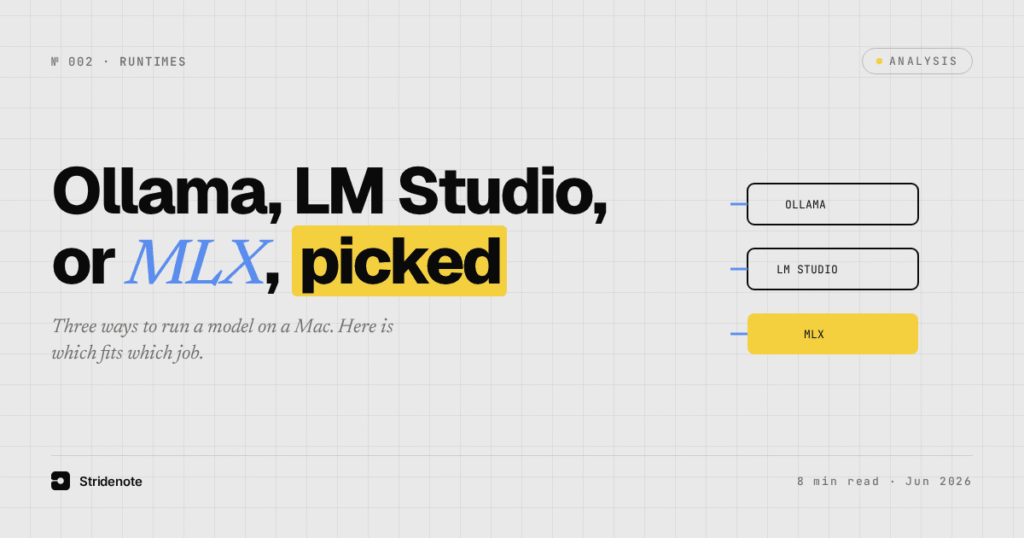
How to choose between Ollama, LM Studio, and MLX for local models
Three ways to serve a local model on a Mac. We compare Ollama, LM Studio and MLX on setup, speed…
 Insights
The Hidden Costs of ‘Free’ Cloud AI Tiers
A free cloud AI tier does not cost zero. It costs something other than dollars: your data, your reliability, your…
 Insights
Agentic AI explained: what it changed for local AI
Agentic AI explained without the hype. Stripped down it is one real shift: a model that answers questions became a…
 Insights
Local Deep Research vs Perplexity and the Cloud
Local deep research vs Perplexity: a research engine on your own machine keeps every query private and charges nothing per…
 Insights
Open WebUI vs Jan: The Local ChatGPT, Picked
Open WebUI vs Jan: two ways to put a private ChatGPT in front of someone. A feature-rich browser workspace, or…
 Insights
Do you need an agent framework? smolagents, and when to skip it
Do you need an agent framework at all? smolagents vs the alternatives, and why most of the noise is selling…
 Insights
Is Local AI Good Enough to Replace the Paid Tools?
Is local AI good enough to replace the paid tools? For most of what you do in a day, yes.…
 Insights
Which Local LLM Should You Actually Run in 2026?
The best local LLM in 2026 is not the biggest one. It is the model that fits your RAM with…
 Insights
Cloud AI vs local: the true cost compared
Stop arguing about whether local AI is cheaper. Add up the real cost of AI subscriptions vs local: a machine…
 Insights
Ollama vs MLX vs Jan: Running Local Models on a Mac
Three ways to run a model on Apple Silicon: the foundation, the fast one, and the friendly one. We run…
 Insights
Aider vs Cline vs OpenCode vs OpenHands, Picked for You
Four open-source coding agents, four different answers to one question: where do you want to work? Terminal, editor, app window,…
 Insights
OpenCode vs Pi vs Cursor: Which Coding Agent Do You Need?
Three coding agents, three different bets on where you work and where your code goes. We have run all three.…
 Insights
Best local model for OpenCode, compared
Nemotron vs DeepSeek for local coding. DeepSeek scores higher on pure coding benchmarks, and we still run Nemotron as the…